
Talk to us
Talk to us
This system is used for:
Engine Air Intake Filters: Testing filtration performance according to ISO 5011.
Industrial Air Filters: Performance testing for machinery intake filters.
Customer-Specific Standards: Flexible adaptation for custom test requirements.
Quality Control & R&D: Evaluating filter efficiency, dust holding capacity, and airflow restriction.
| Parameter | Unit | Value |
|---|---|---|
| Test Flow Rate | m/min | 2 50 (at 20C and 1013 hPa) |
| Differential Pressure Measuring Range | Pa | 15.000 |
| Compressed Air Supply | bar | 6 |
| Power Supply | 400 VAC, 125 A | |
| Test Aerosol | ISO 12103-1 A2 (fine), ISO 12103-1 A4 (coarse) |
Powerful Two-Stage Flow Generation: Provides stable and adjustable airflow for a wide range of filters.
Precise Flow Rate Measurement: Flow adjustable for each application and standard.
Mass Flow Regulated Dust Dosing: Ensures accurate dust loading for consistent testing.
High Automation: Test runs are mostly automated, including data collection, operator guidance, and report generation.
Comprehensive Filter Evaluation: Measures differential pressure, airflow restriction, dust loading, gravimetric efficiency, and downstream particle size distribution.


Price:

Price 5800.0 USD ($) / Unit
Minimum Order Quantity : 1 Unit
Ozone Generator : Other, Optional
UV Sterilizer : Other, Optional
Voltage : 230V AC, 50 Hz
General Use : Soiling (Dusting) Testing of Solar Cell Modules

Price 90000.0 USD ($) / Unit
Minimum Order Quantity : 1 Unit
Ozone Generator : Other, Optional
UV Sterilizer : Other, Optional
Voltage : 220240V or custom
General Use : Testing Gas Turbine Air Filters
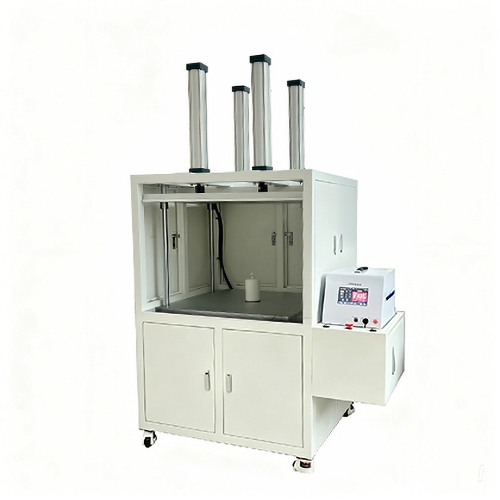
Price 1000.0 USD ($) / Unit
Minimum Order Quantity : 1 Unit
Ozone Generator : Other, Optional
UV Sterilizer : Other, Optional
Voltage : 220 V / 50 Hz (Customizable)
General Use : ISO 14644 Air Tightness Testing Equipment, HEPA/ULPA filter integrity testing

Price 1500.0 USD ($) / Piece
Minimum Order Quantity : 1 Piece
Ozone Generator : No
UV Sterilizer : No
Voltage : 220V AC, 50/60Hz
General Use : Membrane filter pore size and integrity analysis


 Send Inquiry


 Send Inquiry
