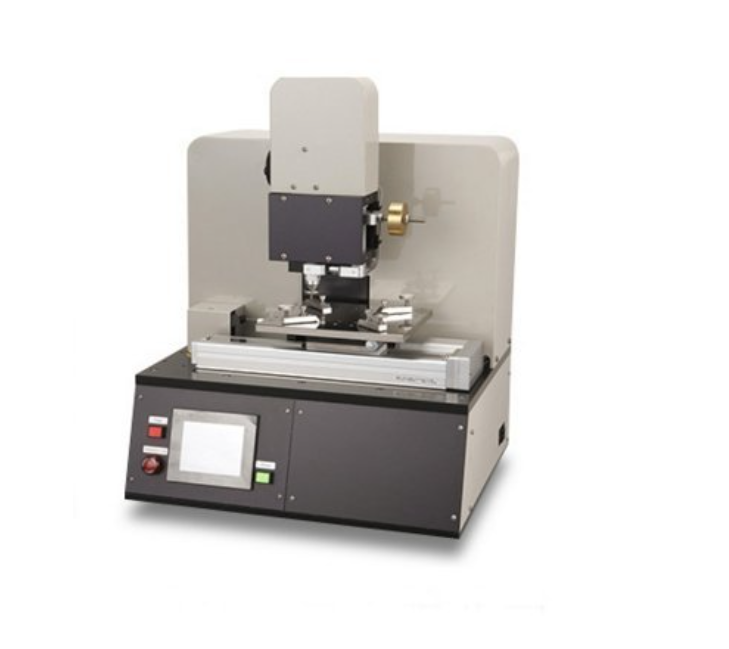
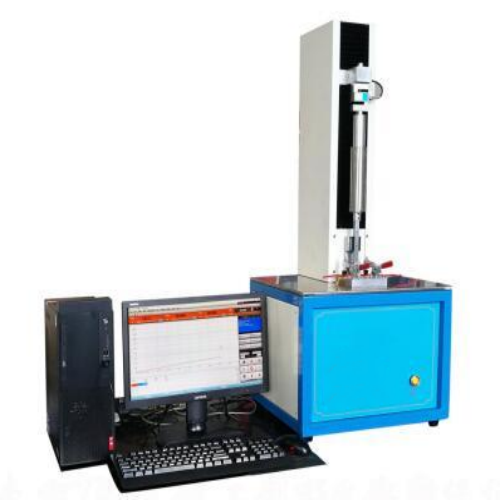
About Automatic Coating Adhesion Scratch Tester
Application
Coating material research and performance evaluation, including metallic, ceramic, and functional thin-film coatings.
Adhesion testing for surface treatment and protective layers, such as anodized films, sprayed coatings, and powder coatings.
Quality control and inspection in industrial manufacturing to ensure reliable bonding between coating and substrate.
Material science research to evaluate coating wear, scratch, and peel resistance under different conditions.
Standards
JB/T 8554-1997 Automatic Scratch Test for Coating Adhesion (Mechanical Industry Standard)
ISO 20502:2016 Coating Scratch Test
ASTM D7027 Coating Scratch Hardness Test
ISO 1518-1 / ISO 1518-2 Coating Hardness and Adhesion Test
DIN EN 4624 Pull-Off Test for Coating Adhesion
Parameters
| Parameter |
Specification |
| Measurement Methods |
Acoustic emission, friction force, static pressure, constant load, electrical conductivity (optional) |
| Test Load Range |
0200 N (automatic loading), accuracy 0.3 N |
| Coating Thickness Detection Range |
0.2150 m |
| Standard Indenter |
Diamond, cone angle 120, tip radius R=0.2 mm |
| Sample Size |
Adjustable 1075 mm |
| Power Supply |
210235 V, 5060 Hz, 2000 W |
| Workbench Dimensions |
1500 750 800 mm (user-supplied) |
Features
Integrated Multi-Measurement Methods: Simultaneously supports acoustic emission, friction force, static pressure, constant load, and optional electrical conductivity.
Automatic Loading with High Accuracy: Automatic load application with 0.3 N precision ensures repeatable and stable testing.
Wide Coating Thickness Range: Suitable for coatings from 0.2 to 150 m, covering most industrial applications.
High-Precision Indenter: Diamond tip radius 0.2 mm, cone angle 120, guaranteeing consistent scratches and accurate measurement.
User-Friendly Operation: Adjustable sample fixture accommodates 1075 mm samples for easy preparation and repeated testing.
Compliant with Standards: Designed according to JB/T 8554-1997 and relevant international standards.
Advanced Testing TechnologyThis scratch tester utilizes a linear servo-driven stage and a precision diamond tip to deliver consistent and accurate scratch and adhesion assessments. Programmable test modes, automatic data storage, and intuitive software make complex testing simple and efficient. The integrated observation LED ensures clear real-time monitoring during every test.
Flexible and Easy OperationDesigned with both automatic and manual control modes, the tester suits various user preferences and test requirements. The adjustable clamp accommodates specimens of differing sizes with ease, while intuitive menu navigation and language support make operation accessible. Parts are easily accessible for straightforward cleaning and maintenance.
Comprehensive Data and ReportingInternal memory enables instant test record storage, and information can be conveniently exported via USB. Supplied PC analysis software allows in-depth data review and report generation, supporting traceability and documentation needs. USB/RS232 interfaces provide further integration into laboratory or production systems.
FAQ's of Automatic Coating Adhesion Scratch Tester:
Q: How does the Automatic Coating Adhesion Scratch Tester operate during testing?
A: The tester works by moving a diamond tip stylus across the coated sample using a linear servo-driven stage. It can apply either a progressive or constant load, depending on the selected test mode, to assess coating adhesion and scratch resistance. Results are displayed digitally and stored in internal memory for later export.
Q: What types of materials and specimen sizes can be tested?
A: This equipment is suitable for coatings applied on both hard and soft substrates within the hardness range of HB-60HRC. The adjustable sample holder supports specimens up to 50 mm x 50 mm in size and a maximum height of 120 mm, making it ideal for a variety of industrial and research applications.
Q: When should I choose progressive load versus constant load test modes?
A: Progressive load mode is preferable when you need to determine the critical load at which a coating fails or shows signs of adhesion loss. Constant load is ideal for comparative studies or repeated validation at specific load levels. Both modes help analyze different aspects of coating performance.
Q: Where is the data from each test stored and how can it be exported?
A: Test data is automatically stored in the instrument's internal memory for secure record-keeping. It can be exported effortlessly via USB to a PC, where included analysis software enables detailed data review and report preparation. Optional RS232 interface is also available for further integration.
Q: What is the process for cleaning and maintaining the tester?
A: Routine cleaning involves manually accessing and wiping down the parts exposed to samples and contaminants. The tester features easily accessible components that simplify both cleaning and routine inspection, ensuring consistent performance and longevity without complex maintenance steps.
Q: How is user safety ensured during testing?
A: The system includes an overload protection mechanism and an emergency stop feature. These safety measures help prevent damage to samples and the tester, as well as safeguard users from unforeseen events during operation.
Q: What are the main benefits of using this automatic scratch tester for coating adhesion assessments?
A: Benefits include precise measurement with high resolution and accuracy, programmable and repeatable testing, streamlined data handling with digital storage and USB export, comprehensive reporting through PC software, and flexible sample handling. These advantages boost efficiency and reliability in both R&D and quality control environments.






 Send Inquiry


 Send Inquiry
