About Automatic Shoe Flexing Testing Equipment
Technical Parameters
| Item |
Specification |
| Test Sample Number |
2 pairs of shoes (4) / 4 sole samples |
| Bending Angle |
30, 45, 60, 90 adjustable |
| Test Speed |
0150 5 cycles per minute |
| Counter |
LCD display |
| Test Range |
09.999.999 cycles |
| Power Supply |
AC220V, 3A |
Accessories
(1)Four palms for shoe/sole clamping
(2)One wrench for adjustments
(3)One power cable
(4)Instruction manual
(5)Delivery note/documentation
Test Procedures
(1)Install the finished shoes or sole samples on the appropriate fixtures.
(2)Set the desired bending angle and test speed on the control panel.
(3)Start the reciprocating bending mechanism.
(4)Monitor the test using the LCD counter, which records the number of cycles completed.
(5)Inspect the specimens after reaching the preset number of cycles or upon visible signs of cracking or damage.
(6)Record results and compare with standard performance requirements.
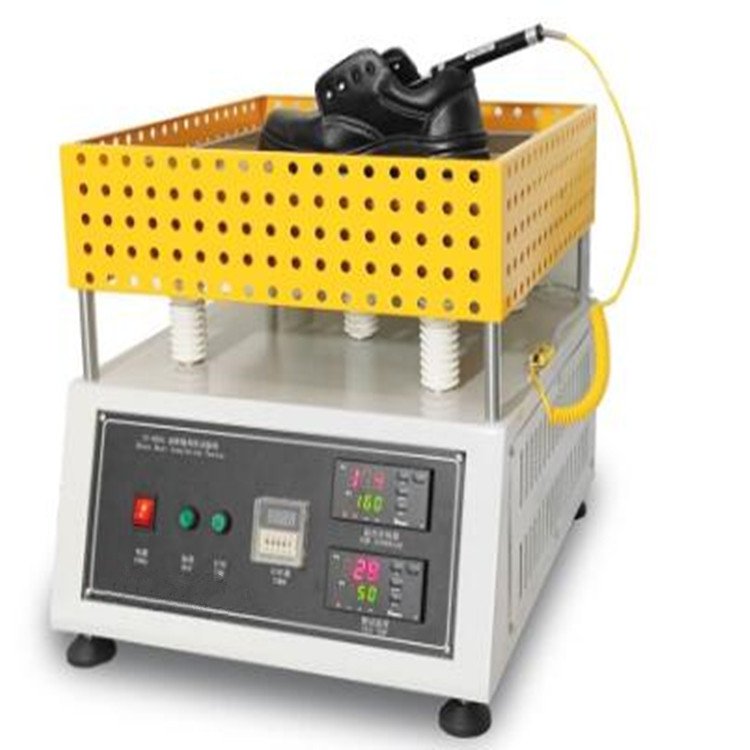
Precision and Flexibility in Shoe TestingThis equipment offers an adjustable test speed, test stroke, and programmable cycles, allowing advanced simulation of real-world shoe flexing conditions. Its microcomputer-controlled digital system provides precise, instant readings, enhancing the reliability of results. The device can test a variety of shoe sizes, accommodating between two and four shoes simultaneously, making it a versatile choice for comprehensive footwear evaluation in laboratories.
Secure and Efficient OperationDesigned with operator safety and convenience as top priorities, the machine comes equipped with an emergency stop, overload protection, and a user-friendly interface. The built-in memory stores test data for easy access and record-keeping, while the quiet operation under 65 dB minimizes noise disturbances in your laboratory. The compact, floor-standing design allows effortless installation in most testing environments.
FAQ's of Automatic Shoe Flexing Testing Equipment:
Q: How does the Automatic Shoe Flexing Testing Equipment operate during the test process?
A: The machine uses microcomputer digital control for automated, programmable test cycles. Simply mount up to four shoe specimens on the stainless steel fixtures, set the desired test speed and stroke, and use the presettable electronic timer to begin. The equipment flexes shoes within the specified cycle range, accurately recording each cycle via a built-in memory and displaying results on the LCD digital display.
Q: What types and sizes of shoes can be tested with this equipment?
A: The equipment is designed to fit standard adult shoe sizes and can accommodate two to four shoe specimens per test. The port size is suitable for most standard shoes, making it ideal for comprehensive flexing resistance testing on various types of finished footwear and soles.
Q: When should I use this equipment in the footwear manufacturing process?
A: This flexing tester should be used during quality control and laboratory testing phases, either before product release or as part of routine quality assurance. It provides essential data on flexing resistance, helping manufacturers ensure their shoes meet industry durability standards.
Q: Where is the best environment to install this testing equipment?
A: The equipment is best suited for use in footwear testing laboratories or quality control labs within manufacturing facilities. It operates effectively in climate-controlled environments with temperatures between 15-35C and humidity levels from 20-80% RH.
Q: What are the key benefits of using this automatic flexing testing equipment?
A: Key advantages include automated operation, high accuracy (to 1 cycle), adjustable test parameters, instant digital results, and secure memory storage. Safety features, quiet operation, and the ability to test multiple shoes at once add to its efficiency, making it an invaluable tool for reliable quality assessments.
Q: How is safety ensured during operation of the equipment?
A: Safety is maintained through built-in emergency stop functions and overload protection mechanisms. These features help prevent accidents and equipment damage, ensuring operator well-being and long-term durability of the machine.




 Send Inquiry


 Send Inquiry
