Bone Cement Flexural Fatigue Testing Machine

Bone Cement Flexural Fatigue Testing Machine

Price 3200.0 USD ($)/ Unit

MOQ : 1 Unit

Bone Cement Flexural Fatigue Testing Machine Specification

  • Resolution
  • 0.001 Nm
  • Temperature
  • Room temperature to 50C
  • Equipment Type
  • Bone Cement Flexural Fatigue Testing Machine
  • Power Supply
  • 220 V AC, 50 Hz
  • Application
  • Fatigue testing of bone cement and biomaterials
  • Hardness
  • Hardened steel fixtures (60 HRC)
  • Max Height
  • 450 mm
  • Specimen Size
  • 75 x 10 x 3.3 mm (typical for bone cement)
  • Accuracy
  • 1% of reading
  • Number of Specimens
  • Up to 6 each run
  • Gas Pressure
  • 0.6 MPa maximum
  • Frequency
  • Up to 5 Hz
  • Port Size
  • Standard 1/4 inch connection
  • Mounting Type
  • Benchtop
  • Display Type
  • Digital LCD display with computer interface
  • Automation Grade
  • Automatic
  • Interface Type
  • USB, RS232
  • Operating Voltage
  • 220 V AC
  • Test Range
  • 0.1 Nm - 100 Nm
  • Features
  • Programmable cycles, automatic data recording, overload protection
  • Humidity
  • 40-80% RH (operating range)
  • Response Time
  • 1 s
  • Measuring Range
  • 0 - 100 Nm
  • Usage
  • Laboratory, research, and quality control
  • Capacity
  • 500 N maximum force
  • Machine Weight
  • 55 kg
  • Test Speed
  • 0.1 - 100 mm/min (adjustable)
  • Test Width
  • Up to 50 mm
  • Test Stroke
  • 60 mm
  • Control Mode
  • PLC/Computer Control
  • Software
  • User-friendly analysis and reporting software
  • Testing Environment
  • Submersible test chamber for wet/dry conditions
  • Data Storage
  • Up to 1 TB internal/external storage
  • Safety
  • Overload emergency stop and interlock system
  • Fixture Material
  • AISI 316 stainless steel
  • Noise Level
  • <55 dB during operation
  • Cycle Count Capacity
  • Up to 10 million cycles
  • Alignment Precision
  • <0.1 mm fixture parallelism
  • Compliance Standards
  • ASTM F2118, ISO 5833


About Bone Cement Flexural Fatigue Testing Machine

Application

The Bone Cement Flexural Fatigue Testing Machine is used to evaluate the mechanical durability and flexural fatigue performance of bone cement under repeated bending loads. It simulates long-term stresses that bone cement experiences in orthopedic implants, ensuring safety and reliability. Typical applications include:

Orthopedic material testing: Assess fatigue life of bone cement used in joint replacements.

Quality control: Verify consistency and mechanical performance of manufactured bone cement batches.

Research and development: Support optimization of bone cement formulations and mechanical properties.

Standards compliance: Conduct tests according to ISO 5833. ASTM F2118. and other orthopedic material testing guidelines.

This machine ensures bone cement can withstand repeated physiological flexural loads, reducing the risk of implant loosening or failure.

Product Features

Next-generation fatigue testing system driven by a large electromagnetic motor as the actuation core.

Direct-drive electromagnetic motor ensures stable operation and high repeatability, providing precise force and displacement control.

Built-in electromagnetic actuator with low friction and high repeatability; system response is fast and high-speed.

Capable of performing tension, compression, bending, shear, creep, and relaxation tests.

Meets modern material testing requirements for high precision, high frequency, stability, and durability.

Features oil-free, seal-free, maintenance-free operation, long service life, high integration, easy installation, and compact footprint.

Various fixtures and accessories are available for different test setups.

Specifications

Parameter Specification
Maximum Peak Load 8500 N
Dynamic Peak Load 6000 N
Static Peak Load 4200 N
Testing Machine Class 0.5
Load Measurement Range 0.4%100% F.S.
Load Measurement Accuracy Better than 0.2% of reading (within range)
Maximum Fatigue Loading Frequency 100 Hz
Axial Stroke 30 mm
Displacement Resolution 0.1 m
Test Space (between upper and lower fixtures) 0950 mm
Net Weight 900 kg
Dimensions (LWH) 1000 700 1800 mm
Optional Environmental Accessories Water bath
High-temperature environment
Low-temperature environment
Humidity-controlled environment
Applications Fatigue, fracture, and static testing of metal, polymer, and composite materials
Static/dynamic testing of surgical implants (trauma, joint, spinal, dental)
Polymer tensile fatigue testing
Rubber crack propagation testing
Other specialized material fatigue tests
Optional Fixtures and Tooling Mechanical tension, compression, and bending fixtures
Specialized femoral stem fixture
Four-point bending fixtures
Spinal rod/screw fixtures
Tibial platform fixtures
Vertebral body resection model compression/tension fixtures
Dental implant fixtures


Superior Fatigue Testing Performance

Engineered for rigorous fatigue characterization, this machine allows up to 10 million cycles under controlled conditions, simulating both wet and dry environments with its submersible test chamber. Its precision fixtures and adjustable test speed (0.1 - 100 mm/min) offer outstanding reproducibility for bone cement testing, adhering to the strictest compliance standards.


Advanced Data Management and Analysis

Equipped with user-friendly analysis software and up to 1 TB of internal or external data storage, this device streamlines data collection and reporting. Digital LCD display and computer interfaces (USB, RS232) ensure seamless integration with laboratory networks, supporting detailed real-time analysis and secure archiving.


Comprehensive Safety and Automation

The machine incorporates multiple safety layers, including overload emergency stop, interlock systems, and automatic shutdown features. Its automated operation reduces user intervention, while its noise level remains below 55 dB to ensure a comfortable laboratory environment. With precise PLC or computer control, it offers reliable and safe fatigue testing every time.

FAQ's of Bone Cement Flexural Fatigue Testing Machine:


Q: How does the Bone Cement Flexural Fatigue Testing Machine simulate physiological conditions during testing?

A: The machine includes a submersible test chamber that can operate in both wet and dry environments, allowing for realistic simulation of physiological conditions such as body fluids. This setup enables the fatigue behavior of bone cement to be evaluated accurately under conditions closely resembling actual use.

Q: What is the maximum cycle capacity and how is it beneficial for long-term testing?

A: The device accommodates up to 10 million test cycles, making it suitable for extended fatigue testing to predict the long-term performance and durability of bone cement materials. This high capacity ensures reliable analysis of material behavior under repetitive stress, mimicking years of cyclic loading experienced in vivo.

Q: When should I use this equipment in my workflow?

A: This machine is ideally employed during the laboratory, research, or quality control phases of bone cement and biomaterial development. Use it when you need to determine flexural fatigue properties, benchmark products to industry standards, or perform regulatory compliance testing in accordance with ASTM F2118 and ISO 5833.

Q: Where can this machine be installed and operated effectively?

A: Its benchtop design and moderate weight (55 kg) allow for convenient installation in laboratory and research environments. The machine operates within a temperature range of room temperature to 50C and humidity between 40-80%, making it suitable for most controlled laboratory settings.

Q: What is the process for setting up a test using this machine?

A: To begin a test, mount up to six specimens into the AISI 316 stainless steel fixtures, program the desired test parameters through the PLC or computer software, and select the required test environment (wet or dry). Automatic data recording and programmable cycles simplify operation, while safety features protect both users and samples during the test.

Q: How does the machine ensure accuracy and safety during testing?

A: Alignment precision is maintained to less than 0.1 mm parallelism, and force accuracy is within 1% of reading. Safety is upheld through an overload emergency stop and an interlock system, with hardened steel fixtures (60 HRC) ensuring secure specimen clamping. Automation and secure data management further reduce the risk of human error.

Q: What are the main benefits of using this machine for bone cement fatigue testing?

A: The main benefits include high-speed, programmable testing, reliable safety features, advanced data management, compliance with global standards, and the ability to test multiple specimens simultaneously. Its automatic operation and precise controls streamline testing processes, saving time and reducing manual effort in laboratory settings.

Tell us about your requirement
product

Price:

Quantity
Select Unit

  • 50
  • 100
  • 200
  • 250
  • 500
  • 1000+
Additional detail
Mobile number

Email

More Products in Materials Testing Machines Category

Powder Resistivity and Compaction Density Testing System ASTM B328 Metal Powder Testing Equipment

Powder Resistivity and Compaction Density Testing System ASTM B328 Metal Powder Testing Equipment

Price 1500.0 USD ($) / Set

Minimum Order Quantity : 1 Set

Features : Automatically records resistivity & density; Calibration correction; Overload protection; Data export capability

Test Range : 0.1 m to 100 cm

Operating Voltage : 220V AC 10%

Interface Type : USB/RS232 (Data logging to PC)

Sliding bearing PV friction testing machine

Sliding bearing PV friction testing machine

Price 3000.0 USD ($) / Unit

Minimum Order Quantity : 1 Unit

Features : Data storage, print output, programmable test parameters

Test Range : 0 2000 N

Operating Voltage : AC 220V 10%

Interface Type : USB/RS232

Femoral Stem Fatigue Testing Machine ISO 7206 Standard Equipment

Femoral Stem Fatigue Testing Machine ISO 7206 Standard Equipment

Price 5000.0 USD ($) / Set

Minimum Order Quantity : 1 Set

Features : Compliance with ISO 7206, easy specimen mounting, corrosionresistant finish

Test Range : 0 10 kN dynamic load

Operating Voltage : 220V 10%, 50 Hz

Interface Type : USB/RS232/PC connectivity
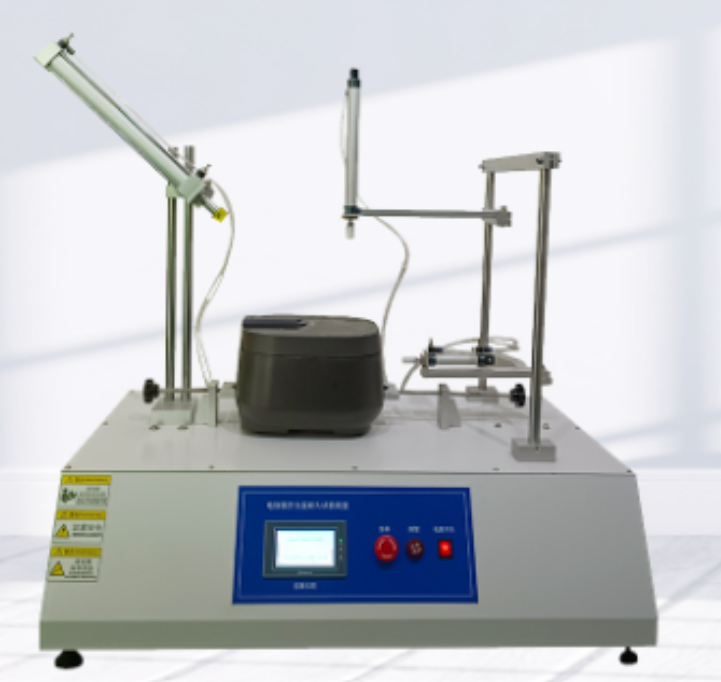
Kitchen Appliance Reliability Tester for Rice Cooker Safety Test

Kitchen Appliance Reliability Tester for Rice Cooker Safety Test

Price 600.0 USD ($) / Piece

Minimum Order Quantity : 1 Piece

Features : Programmable, Automatic Cycle, Data Storage

Test Range : 199,999 cycles

Operating Voltage : AC220V

Interface Type : USB / RS232


Back to top