
Talk to us
Talk to us
(1)YY/T 0959-2014 (China): Specifies compression fatigue testing protocols for intervertebral fusion devices, including load ratios, frequency, and failure criteria.
(2)ASTM F2077-17 (International): Defines methodologies for evaluating the fatigue strength of intervertebral body fusion devices under compressive loading.
(3)ISO 12189-1: Additional compliance for mechanical testing of spinal implant components.
The Compression Fatigue Testing Machine is used to evaluate the durability and fatigue resistance of materials, mechanical components, and structural parts under repeated compressive loads. It helps manufacturers and researchers predict long-term performance, optimize designs, and ensure compliance with mechanical testing standards.
Electromagnetic Servo Motor: 25 kN axial force capacity with programmable load ratios (R=0.110).
Triaxial Strain Gauge: Measures axial/radial strains simultaneously (0.1 resolution).
Dynamic Load Control: 0.120 Hz frequency range with programmable waveforms (sine, square, random, custom).
Thermal-Mechanical Chamber: 0.3C temperature stability with integrated humidity control (1095% RH).
High-Resolution Imaging: Optional integration with micro-CT systems for in-situ crack analysis.
Safety System: Emergency stop, overload clutches, and laser-based specimen breakage detection.
| Parameter | Specification |
|---|---|
| Max. Axial Force | 25.000 N (25 N resolution) |
| Frequency Range | 0.120 Hz (0.01 Hz increments) |
| Load Ratio (R) | 0.110 (adjustable) |
| Axial Displacement | 10 mm (0.1 m resolution) |
| Temperature Control | -20C to +50C (PT1000 sensors) |
| Humidity Control | 1095% RH (non-condensing) |
| Data Sampling Rate | 100 kHz (synchronized across 16 channels) |
| Power Requirements | 220V/110V 10%, 50/60Hz, 3.000W |
| Dimensions (WDH) | 2.000 1.500 2.200 mm |
| Weight | 1.200 kg (including environmental chamber) |
| Noise Level | <65 dB (A-weighted) |
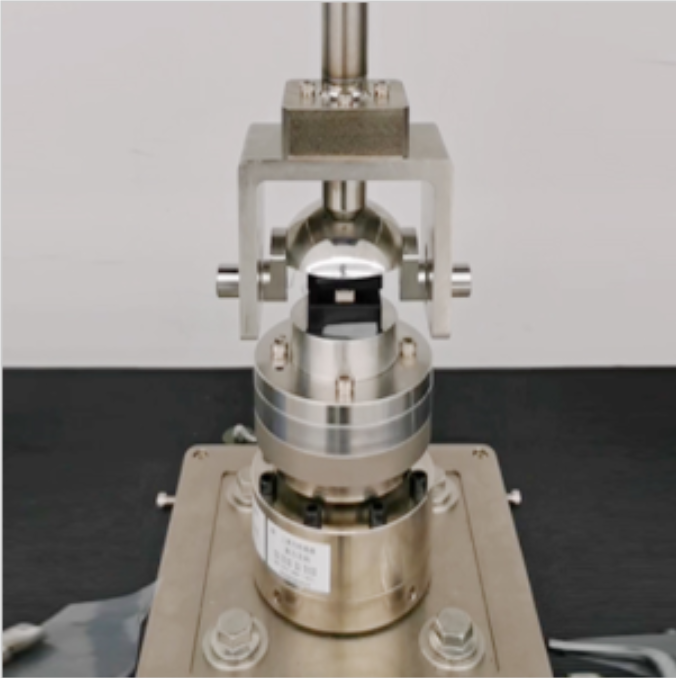

Price:

Price 2200.0 USD ($) / Unit
Minimum Order Quantity : 1 Unit
Specimen Size : Bone Plates up to 200 mm length
Machine Weight : Approx. 45 kg
Control Mode : Digital/Manual
Test Range : Up to 5000 N
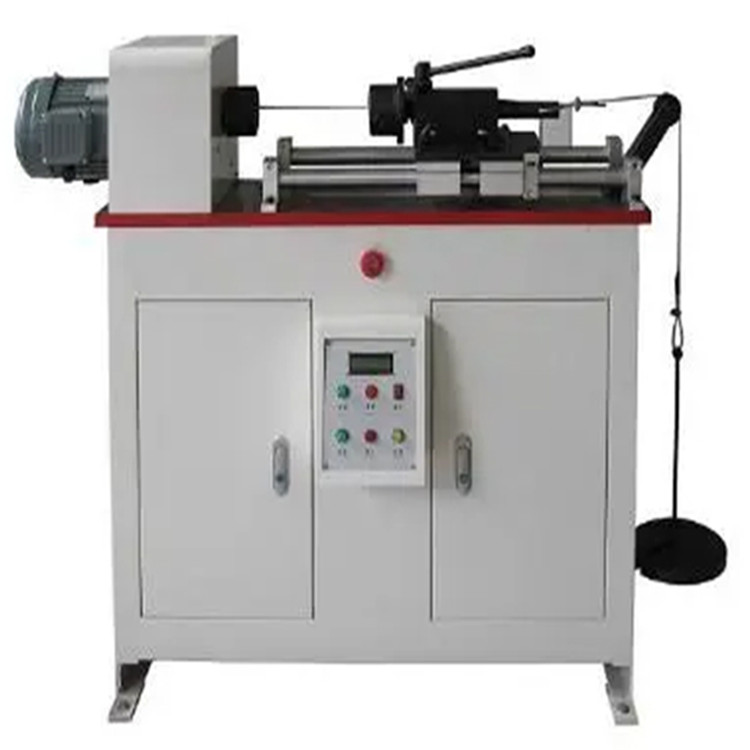
Price 400.0 USD ($) / Unit
Minimum Order Quantity : 1 Unit
Specimen Size : Wire Diameter 0.1~2.0 mm
Machine Weight : 120 kg
Control Mode : Digital/PLC Control
Test Range : 0~50 kg

Price 4000.0 USD ($) / Unit
Minimum Order Quantity : 1 Unit
Specimen Size : Standard 10 x 50 mm sample
Machine Weight : Approx. 20 kg
Control Mode : Microprocessor / Computer Controlled
Test Range : 0 2000 N

Price 900.0 USD ($) / Unit
Minimum Order Quantity : 1 Unit
Specimen Size : Dia. 120 mm
Machine Weight : Approx. 45 kg
Control Mode : Automatic / Manual
Test Range : O90 0.043 mm to 2 mm


 Send Inquiry


 Send Inquiry
