About Filter Efficiency Testing Equipment
Applications
General ventilation air filters
HVAC system filters and filter media
High-efficiency particulate air (HEPA) filters
Protective masks and respirators with filter elements
Medical and industrial filtration products
Standards
(1) JG/T 22-1999 Test methods for performance of filters for general ventilation
(2) ANSI/ASHRAE 52.1-1992 Test methods for air cleaning devices for general ventilation
(3) EN 779:2002 Air filters for general ventilation Determination of filtration efficiency
(4) JIS B 9908:2001 Test methods for ventilation air filter units and motor-driven air cleaners
(5) EN 1822 High efficiency particulate air (HEPA) filters
(6) ISO 29463 High efficiency particle air (HEPA) filters and filter media
(7) GB 2626 Respiratory protective equipment
(8) GB 32610 Technical specification of daily protective masks
(9) YY 0469 Medical surgical masks
(10) GB 19082 Medical disposable protective clothing
(11) GB 19083 Medical protective masks
Features
Stable cold aerosol generation for consistent test conditions
Simultaneous upstream and downstream particle measurement
High-precision laser particle detection ensures accurate data
Differential pressure measurement enables reliable resistance evaluation
Designed to meet a wide range of international filtration standards
Suitable for both research testing and compliance verification
Technical Parameters
| Item |
Specification |
| Test Function |
Filtration efficiency, flow resistance, and flow rate testing |
| Aerosol Type |
Cold aerosol |
| Aerosol Generation |
Proprietary aerosol generation device |
| Particle Stability |
Continuous and stable output |
| Particle Detection |
Laser particle counter |
| Sensor Type |
Imported high-precision particle detection sensor |
| Measurement Method |
Upstream and downstream simultaneous measurement |
| Pressure Measurement |
Differential pressure transmitter |
| Test Results |
Filtration efficiency, resistance value, flow rate |
| Control Method |
Pressure-regulated airflow |
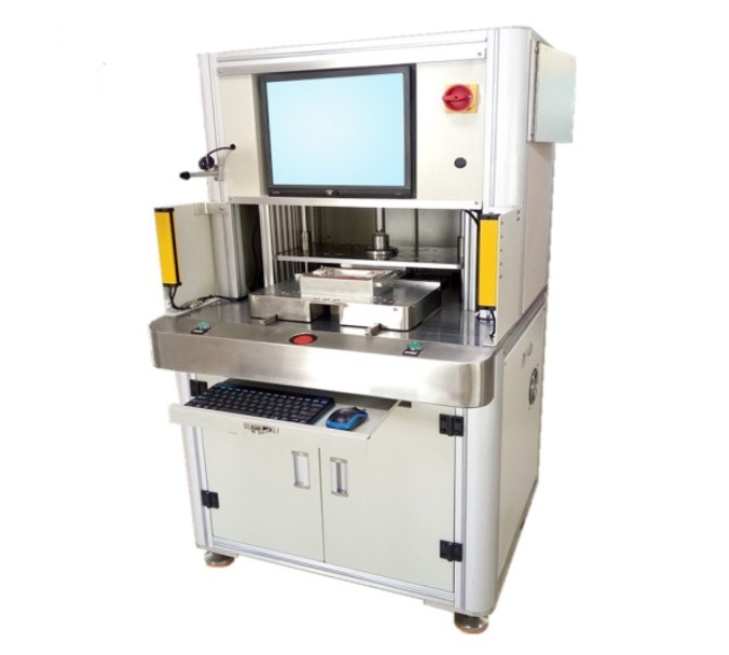
Superior Filter Testing CapabilitiesThis system provides a comprehensive solution for testing the filtration efficiency of face masks, HEPA filters, air purifier cartridges, and flat sheet media. It utilizes multiple testing modes, including particle filtration, BFE, and VFE, ensuring compliance with international standards. Accurate differential pressure readings and customizable sample fixtures make it ideal for various research, validation, and production environments.
Advanced Automation and User-Friendly InterfaceThe equipment incorporates a touchscreen LCD monitor and PLC-based HMI for easy management and control. Automatic calibration with reference media and tool-less filter loading streamline the testing process. With user access management and customizable test programs, it allows laboratories to tailor testing protocols, improve efficiency, and maintain stringent quality control.
Comprehensive Data Handling and Reporting FeaturesAdvanced data output options include direct exports via USB, Ethernet, and support for Excel/CSV formats. The system offers automated report generation, detailed data logging, and robust security through user access controls. This ensures reliable documentation and analytics for regulatory compliance and continuous process improvement.
FAQ's of Filter Efficiency Testing Equipment:
Q: How does the filter efficiency testing equipment perform particle, bacterial, and viral filtration tests?
A: The system utilizes integrated optical particle counters and controlled airflows to conduct filtration efficiency tests for particles, bacteria (BFE), and viruses (VFE). By measuring filtration performance under programmable test conditions, it delivers accurate and repeatable results, meeting ISO, EN 149, and ASTM F2299 standards.
Q: What filters and sample sizes are supported by the testing equipment?
A: The equipment supports a wide variety of filters, including face masks, HEPA media, air purifier cartridges, flat sheet media, and more. Its customizable sample fixture allows for testing filter areas up to A4 size, accommodating both standard and unique filter designs.
Q: When should I calibrate the system for optimal accuracy?
A: Calibration is managed automatically by the equipment using certified reference media. It is recommended to activate auto-calibration at the start of each testing session or after changing filter types to ensure ongoing measurement accuracy (within 1% tolerance for flow and particle counts).
Q: Where can the equipment be operated, and what are the environmental requirements?
A: This testing system is suitable for controlled laboratory environments, operating optimally within 15C to 35C and 30% to 80% relative humidity (non-condensing). Proper placement on a stable surface and access to 220V/50Hz power are essential for safety and peak performance.
Q: What is the process for loading samples and changing filter types?
A: Samples are loaded using a tool-less quick change fixture, allowing users to rapidly swap filter materials without specialized tools. This innovation speeds up the testing workflow and minimizes downtime during high-volume testing routines.
Q: How are data and test reports managed or exported?
A: The equipment features built-in data logging and automated report generation capabilities. Users can export test results via USB or Ethernet in standard formats (Excel/CSV), simplifying data analysis and ensuring traceable documentation for audits or certification.
Q: What are the main benefits of using this automated testing system?
A: Key benefits include high-accuracy measurements, compliance with global standards, rapid sample changes, robust data management, low operating noise, and customizable testing programs. These features collectively enhance laboratory productivity, ensure reliable product validation, and facilitate easy regulatory reporting.



 Send Inquiry


 Send Inquiry
