About Flexometer / Bally type flexometer
Application
Bally flex tester is designed to evaluate the flexural resistance of leather to continual flexure. It is an universal instrument to assess the flexural resistance of all kinds of light leathers and surface trim, as well as to evaluate the specimens propensity to crack, similar to the crease that forms in a shoe's upper that flexes during walking. The flexing mechanism of the Bally flex tester is different from that of the shoe upper flex tester. The functions of two testers complement mutually. The tester is also used for the pretreatment of specimens prior to the determination of water vapor permeability especially of shoe upper materials used for protective footwear.
Features
1. The machine is simple to use, installed on the table, and can plug in anytime.
2. There are 12/24 -station models, also available for low temperature models (up to -20 C). The temperature values vary depending on the ambient temperature of the machine.
3. Two types of selective test stations to test multiple samples at a time with a high degree of stability.
4. The control panel has a high degree of automation, easy operation.
Technical Parameters
| Items |
Parameters |
| Flexing angel |
22.5 |
| Speed |
1005cpm |
| Instrument material |
Stainless steel |
| Surface treatment |
Paint spraying |
| External dimension |
85.65238cmLWH |
| Weight |
41kg |
| Power supply |
220V50Hz1A |
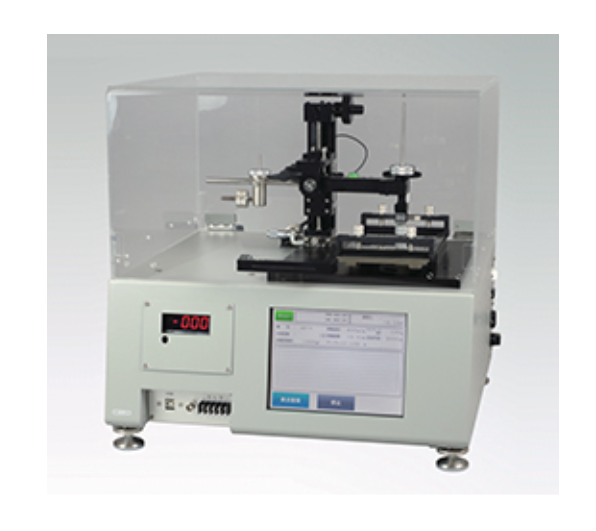
Compliant, Reliable Testing SolutionDesigned to conform to global standards like ISO 5402 and SATRA TM55, the Flexometer / Bally Type Flexometer ensures reliable and repeatable flexing resistance results for materials testing. Its powder-coated mild steel construction guarantees long-term durability, while safety features such as a transparent protective shield and low noise operation support laboratory safety and comfort.
Efficient & Simultaneous Multi-Specimen TestingThe quick-action lever system allows users to swiftly secure up to six samples at once. Adjustable test ranges and an instant digital readout improve workflow efficiency by enabling simultaneous assessment and immediate data acquisition, reducing overall testing time and increasing productivity in laboratory environments.
Advanced Digital Control & Data AccuracyEquipped with a six-digit digital counter on a user-friendly digital panel, this instrument provides high-resolution (1 cycle) and instant response measurements. Adjust test settings and monitor progress with ease, ensuring data integrity and minimizing manual intervention for error-free analysis.
FAQ's of Flexometer / Bally type flexometer:
Q: How does the Flexometer / Bally Type Flexometer operate for testing material flexing resistance?
A: This flexometer utilizes a semi-automatic system where up to six specimens are clamped using a quick-action lever. The device flexes the materials at a digitally controlled rate of 60 2 cycles per minute, and the number of cycles is tracked by a six-digit digital counter for accurate measurements.
Q: What types of materials can be tested with this flexometer?
A: The equipment is designed for testing the flexing resistance of leather, coated fabrics, synthetic materials, and other similar substrates, which are commonly used in footwear, upholstery, and related industries.
Q: When should I use this instrument in the material testing process?
A: Use the Flexometer / Bally Type Flexometer during the quality control or research phase to assess the flexing durability of materials before they are used in final product manufacturing or development.
Q: Where is this flexometer best suited for use?
A: It is optimally used in laboratories dedicated to material testing, research and development facilities, or quality assurance departments within manufacturing plants for footwear, upholsteries, and synthetic materials.
Q: What is the specimen clamping process and how many samples can be tested at once?
A: The machine employs a quick-action lever system for specimen clamping, allowing up to six samples (each 45 x 70 mm) to be positioned and tested simultaneously, increasing efficiency and throughput in testing workflows.
Q: What are the main benefits of using this Flexometer / Bally Type Flexometer?
A: Key benefits include high testing accuracy, conformity with international norms, digital control and readout, ability to assess multiple samples at once, enhanced operator safety with a transparent shield, and workflow efficiency owing to its semi-automatic operation.
Q: How is the test data displayed and what is its accuracy?
A: Test data is displayed on a six-digit digital counter with a resolution and accuracy of one cycle, ensuring precise tracking of flex cycles up to 999,999 for each testing session.




 Send Inquiry


 Send Inquiry
