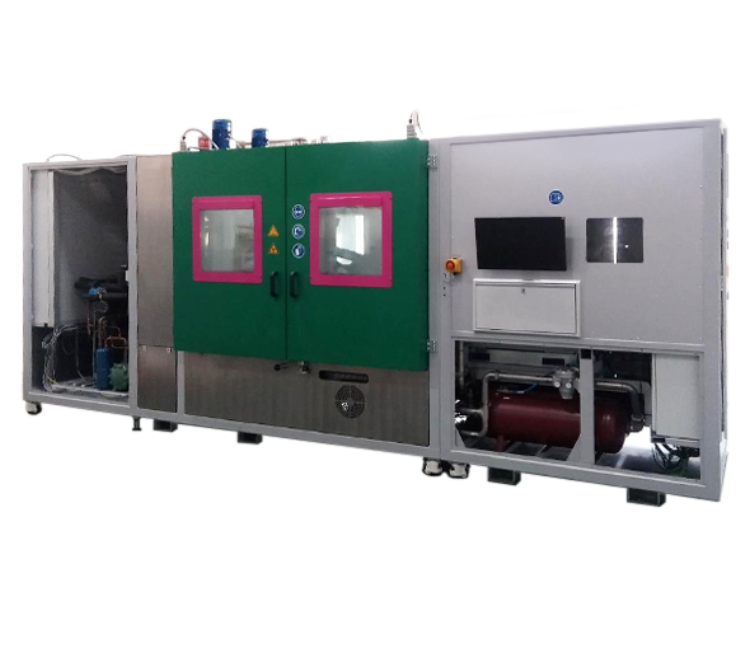
About Gas pulse testing machine
Parameters
| Parameter Category |
Details |
| Equipment Dimensions |
4100 2400 2000 mm (W H D) |
| Environmental Chamber Dimensions |
1500 1500 1000 mm (W H D) |
| Rated Power |
35 kW |
| Test Medium |
Air |
| Pressure Range |
-0.5 5 bar |
| Pressure Frequency |
> 0 2 Hz |
| Pressure Waveform |
Trapezoidal, near Sine |
| Air Medium Temperature Range |
+30 +250C |
| Environmental Chamber Temperature |
+30 +250C |
| Test Channels |
8 |
| Motion Device Frequency |
> 0 2 Hz |
| Motion Device Amplitude |
max. 30 mm |
Features
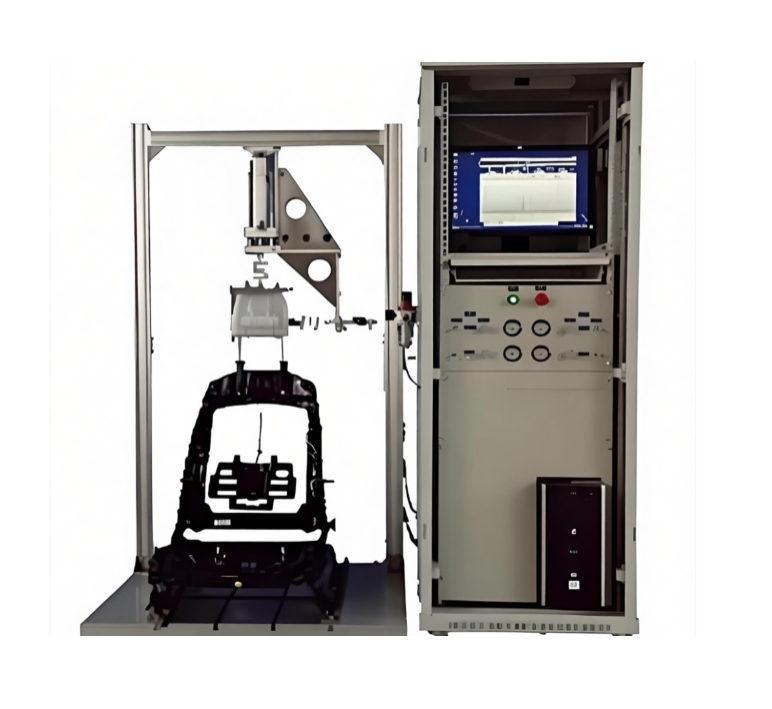
Designed for testing automotive motor parts, particularly turbocharger pipelines.
Performs high-temperature pressure pulse testing under hot air conditions.
Equipped with a large environmental chamber for sample placement.
Pressure range from -0.5 to max. 5 bar.
Automatic leak detection and leak testing with fail-safe shutdown for defective samples.
Integrated robot for 3D motion simulation of test samples.
Windows-based control unit with real-time data recording.
Precision Impulse Fatigue TestingThis Gas Pulse Testing Machine ensures accurate impulse fatigue assessment for hoses and similar components. The unit provides programmable cycles, adjustable test parameters, and digital data monitoring, all controlled via an intuitive PLC panel. It delivers reliable, repeatable results crucial for quality assurance in manufacturing and research applications.
Comprehensive Safety & SupportBuilt with emergency stop and pressure relief valve features, the machine prioritizes operator safety during every test. Onsite installation and training are provided to ensure optimal machine performance and user competence. Coupled with a sturdy powder-coated steel chamber, it's designed for durability and peace of mind.
Versatile Control & Data ManagementBenefit from a digital LCD interface and options for RS232, USB, or Ethernet communication. Test data is securely stored onboard and can be easily exported through SD card. Users have complete flexibility over test parameters, cycle counts, and export formats to meet precise quality control demands.
FAQ's of Gas pulse testing machine:
Q: How does the Gas Pulse Testing Machine perform impulse fatigue testing?
A: The machine uses programmable cycles to subject hoses, pipes, radiators, and other components to repeated gas pressure pulses within a controlled environment, simulating long-term operational fatigue and helping gauge product durability.
Q: What safety features are included in this machine?
A: Safety is ensured through an emergency stop button, a pressure relief valve, and safety shutoff functions. These features are designed to protect both the operator and the equipment during testing procedures.
Q: When should I consider using a Gas Pulse Testing Machine in my quality control process?
A: Employ this equipment whenever you need to assess the impulse fatigue life of products such as hoses, pipes, or cooling system components-especially for research, QC, and product certification purposes.
Q: Where can this Gas Pulse Testing Machine be installed?
A: Due to its floor-standing design and automatic operation, the machine is suitable for laboratory, manufacturing, or quality control settings. Onsite installation support is provided for seamless setup and integration.
Q: What gases and pressures can the device accommodate during tests?
A: The system supports compressed air, nitrogen, and CO2 as test media, with a gas pressure range of 0 to 1.0 MPa (adjustable) and a measuring range of 0.05 to 1 MPa with 0.5% F.S. accuracy.
Q: What is the process for exporting and managing test data?
A: Test data is stored onboard and can be exported using an SD card. Additionally, optional Ethernet connectivity allows data to be shared across networks, and standard RS232/USB ports facilitate broader compatibility.
Q: What benefits does the machine offer compared to manual testing methods?
A: It delivers automated, highly accurate, and repeatable testing with digital controls, reducing human error and time investment. Advanced features such as programmable cycles, quick test setup, and automated data output significantly enhance productivity and reliability.





 Send Inquiry


 Send Inquiry
