About Surface Scratch Resistance Testing Machine
Application
Primary test objects
Accessible solid insulating parts of household appliances
Components of similar electrical products
Printed circuit boards (PCBs)
Plastic and polymer insulating materials used in electrical enclosures
Typical application scenarios
Safety verification of electrical appliance insulation
Mechanical durability assessment of insulating surfaces
Conformity testing for electrical safety certification
Laboratory type testing and routine production inspection
Standards
(1) GB 4706.1-2005 Safety of household and similar electrical appliances Part 1: General requirements, Clause 21.2
(2) GB 4943.1-2011 Information technology equipment Safety Part 1: General requirements, Clause 2.10.8.4
(3) IEC 60335-1:2004 Household and similar electrical appliances Safety Part 1: General requirements, Clause 21.2
(4) IEC 60950-1:2005 Information technology equipment Safety Part 1: General requirements, Clause 2.10.8.4
Parameters
| Parameter |
Specification |
| Power supply |
220 V AC, 50 Hz |
| Test station |
Single station |
| Control system |
PLC control, 7-inch color touch screen, stepper motor drive |
| Stylus tip radius |
R0.25 0.02 mm |
| Stylus apex angle |
40 |
| Scratch speed |
20 5 mm/s (presettable) |
| Scratch force |
10 0.5 N |
| Scratch spacing |
050 mm (presettable) |
| Scratch angle |
8085 (fixture fixed) |
| Specimen tray |
Rotatable by 90, multiple mounting holes |
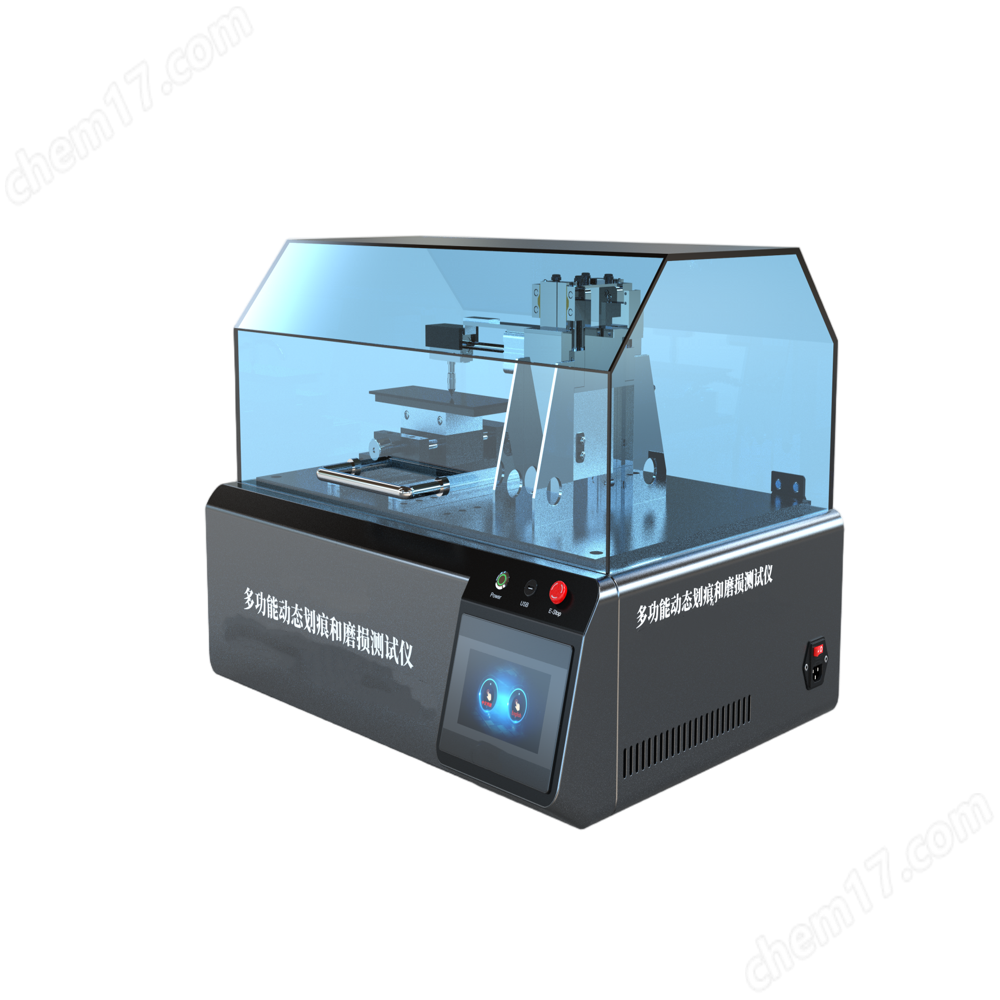
Advanced Testing VersatilityThis surface scratch testing machine accommodates a wide range of coatings and substrates thanks to its adjustable loading (0.01-10N) and test width (up to 70 mm). Users can select a standard diamond stylus or opt for various interchangeable tips, ensuring compatibility with diverse test requirements in laboratory or quality control settings.
Intuitive Digital Control & SafetyOperate the tester with ease using the modern touch panel, which manages test speed (1-60 times/min), stroke (20-100 mm), and programmable test cycles. The system includes enhanced safety features such as emergency stop and overload protection, making it secure for regular laboratory use.
Robust and Reliable ConstructionDesigned with a powder-coated, corrosion-resistant body, this machine boasts durable construction for longevity. With a stable table-top design and efficient 45 kg weight, the equipment is well-suited to demanding industrial or laboratory environments.
FAQ's of Surface Scratch Resistance Testing Machine:
Q: How do I adjust the test arm load on the Surface Scratch Resistance Testing Machine?
A: The test arm load can be adjusted either manually or automatically via the digital control panel. You can select the desired test force within the standard measuring range of 0.01 to 10N, ensuring precise repeatability for different material hardnesses.
Q: What specimen size can this scratch resistance machine accommodate?
A: The machine is designed for single-sample testing with a minimum specimen size of 100 x 100 mm and a maximum specimen holder height of 150 mm, making it suitable for a variety of material samples.
Q: When is it appropriate to use this machine in my quality control process?
A: This machine is ideal for integration during both R&D and final inspection phases. It delivers precise scratch resistance data for evaluating coatings, films, and decorative materials to meet quality and durability standards.
Q: Where should the machine be installed for optimal performance?
A: Install the machine on a stable lab bench or quality control station, in an environment with ambient temperatures of 10-40C and relative humidity up to 85%. Ensure access to an AC 220V power supply and a 6 mm air tube for gas pressure (0.5-0.7 MPa).
Q: What is the process for conducting a scratch resistance test?
A: Begin by mounting the specimen securely on the sample holder. Set testing parameters-including load, speed, and test stroke-using the touch panel. Select the appropriate stylus, then initiate the programmable cycle. The built-in timer and automatic stop ensure accurate test execution, with results shown on the digital display.
Q: How does investing in this scratch tester benefit my laboratory?
A: Utilizing this machine enhances your laboratory's capability to determine surface durability, ensuring product quality and performance. It boosts testing efficiency through automation, provides consistent data, and optimizes safety with built-in emergency stop and overload protection.




 Send Inquiry


 Send Inquiry
