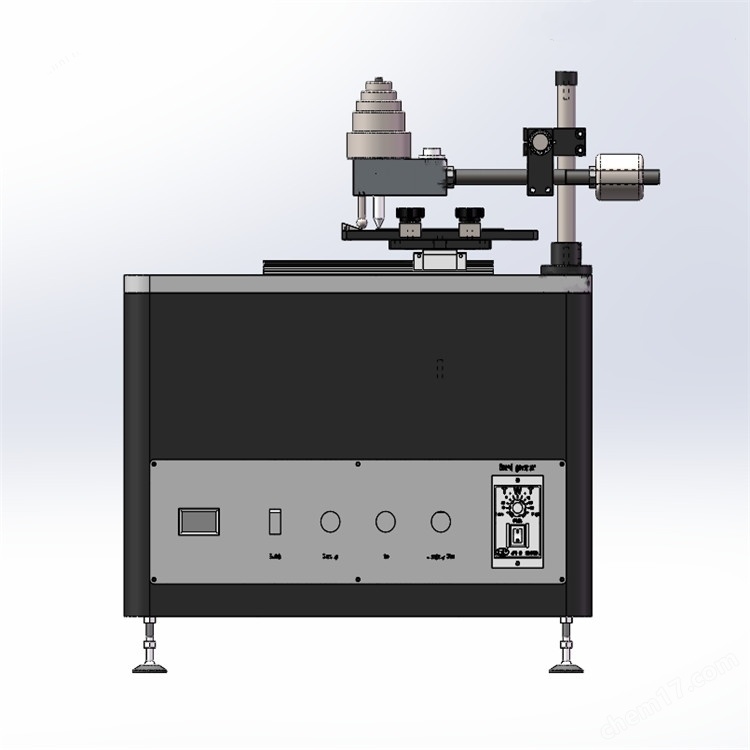
About Surface Scratch Resistance Testing Machine
Application
Scratch resistance evaluation of printed circuit board (PCB) coatings
Durability testing of surface coatings on electrical and electronic enclosures
Mechanical strength verification of plastic or coated housings
Quality control testing for household and similar electrical appliances
Compliance testing for safety-related surface durability requirements
Typical test samples include:
PCB protective coatings
Plastic housings and covers
Electrical appliance enclosures
Coated metal or composite surfaces
Standards
GB 4943-2001 Information Technology Equipment Safety General Requirements (Clause 2.10.6.6: Mechanical strength / drop resistance / enclosure scratch resistance)
GB 4706.1-2005 Household and Similar Electrical Appliances Safety General Requirements (Clause 21.2: Mechanical strength / enclosure scratch resistance)
Parameters
| Item |
Specification |
| Steel needle cone angle |
40 |
| Steel needle tip radius |
0.25 0.02 mm |
| Applied tip load |
10 N 0.5 N (axial force) |
| Scratch movement speed |
0 20 mm/s |
| Scratch travel range (X-axis) |
0 200 mm, adjustable |
| Scratch spacing range (Y-axis) |
0 200 mm, adjustable |
| Height adjustment range (Z-axis) |
0 90 mm, adjustable |
| Scratch angle of steel needle |
80 85 |
| Sample adjustment |
90 rotatable |
| Power supply |
AC 220 V, 50 Hz |
Highly Programmable Force ApplicationBenefit from consistent and customizable testing with the ability to apply constant, linear, or step increments in test loads. The machine allows precise adjustment of force parameters through both touchscreen and PLC controls, ensuring comprehensive scratch resistance assessment for a wide range of materials.
Accurate and Efficient ReportingAutomated data export functions generate comprehensive reports in PDF or Excel formats, complete with graphs for visual analysis. The machine supports both real-time monitoring and historical data review, making it ideal for thorough documentation during laboratory and quality control processes.
Enhanced Safety and User ExperienceWork confidently with built-in safety features, including emergency stop, overtravel protection, and power surge safeguards. The floor-standing design with lockable wheels offers stability, while a quiet operation (<65 dB) and integrated LED lighting enable clear, focused testing in various laboratory environments.
FAQ's of Surface Scratch Resistance Testing Machine:
Q: How does the Surface Scratch Resistance Testing Machine apply and control the test load?
A: The machine uses advanced PLC and touchscreen controls to deliver constant, linear, or stepped increments of force within a test range of 0.1 N to 50 N. This programmable approach ensures precise and repeatable scratch resistance evaluations, adaptable to different material types and test protocols.
Q: What type of stylus materials can be used in this testing machine?
A: The standard stylus materials are hardened steel and diamond, suitable for various hardness testing scenarios. Custom stylus materials can also be requested to match specific testing applications and requirements.
Q: When should the automatic calibration system be used?
A: Automatic calibration with standard weights is recommended before starting a new series of tests or after any system maintenance. This process ensures measurement accuracy and compliance with international standards, such as ASTM D3363, ISO 4586, and DIN EN 438.
Q: Where can this equipment be installed and used?
A: This floor-standing machine, equipped with lockable wheels for mobility, is best suited for laboratory or quality control settings in manufacturing facilities. Its adjustable clamps accommodate irregular sample shapes, making it versatile for a range of applications in different environments.
Q: What is the typical process for conducting a scratch resistance test on this machine?
A: Prepare your specimen and secure it with the adjustable clamps. Set your test parameters using the touchscreen-selecting force, speed, and stroke length. Initiate the test; the integrated LED lights provide clear observation, while the machine automatically records and exports your results.
Q: How can users benefit from the automated test report output feature?
A: Users receive detailed, automatically generated reports in PDF or Excel format, including graphs for visual interpretation of results. This enhances data management, supports traceability, and streamlines report generation for quality assessments and audits.




 Send Inquiry


 Send Inquiry
