
Talk to us
Talk to us
(1) Flex durability testing of FPC (Flexible Printed Circuits) used in mobile phones, tablets, laptops, and wearable devices.
(2) Fatigue life evaluation of FFC cables used in displays, cameras, and hinge structures.
(3) Reliability testing of flexible interconnects in automotive electronics and dashboards.
(4) Bending endurance testing of flexible circuits used in medical devices and precision instruments.
(5) R&D validation of new flexible substrate materials and circuit designs.
(6) Quality control testing during mass production of flexible electronic components.
(7) Electrical continuity monitoring during cyclic bending until failure.
(1) Stepper motor drive ensures high positioning accuracy, low noise, and long-term stable operation.
(2) Program-controlled automatic origin reset, eliminating manual fixture repositioning.
(3) Touch screen controller for intuitive parameter setting and program input.
(4) Test angle, speed, test cycles, and motor return-to-origin can be digitally set via touch screen.
(5) Automatic counting with preset test cycles and auto-stop upon reaching the set value.
(6) Electrical conduction detection function with automatic stop when circuit disconnection occurs.
(7) Automatic stop when the specimen bends to the broken line and loses conductivity.
(8) Upper and lower moving fixtures simulate realistic flexing conditions.
| Parameter | Specification |
|---|---|
| Test station | 1 |
| Test angle | 10180 (touch screen digital setting) |
| Test speed | 10120 times/min (touch screen digital setting) |
| Drive motor | Stepper motor (standard), Servo motor optional |
| Test stroke | 15100 mm (manual adjustable) |
| Maximum fixture width | 80 mm |
| Fixture configuration | Upper moving fixture + lower moving fixture |
| Counter range | 0999.999 cycles (preset, auto-stop at break) |
| Test functions | Angle, speed, cycles setting; continuity detection; auto stop; auto origin finding |
| Machine size (LWH) | 450 380 700 mm |
| Machine weight | Approx. 45 kg |
| Power supply | AC 220V, 50 Hz |


Price:
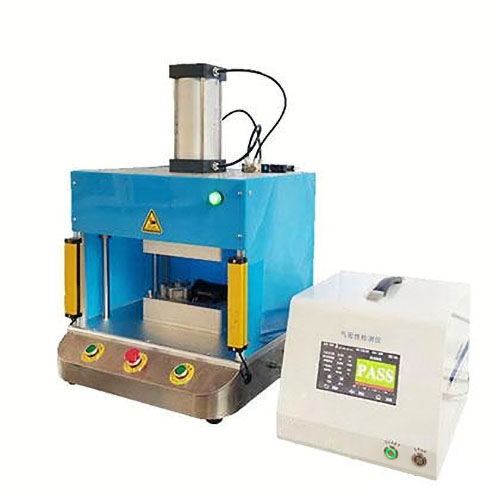
Price 800.0 USD ($) / Unit
Minimum Order Quantity : 1 Unit
Power Supply : AC 220V, 50/60 Hz
Automation Grade : Semiautomatic
Capacity : Single unit operation
Interface Type : Standard RS232/USB
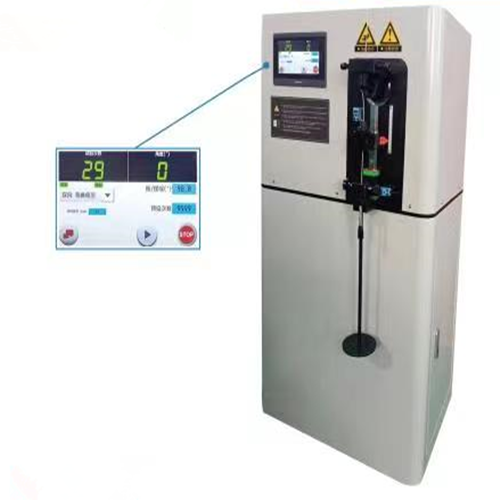
Price 500.0 USD ($) / Piece
Minimum Order Quantity : 1 Piece
Power Supply : AC 220V, 50Hz
Automation Grade : Automatic
Capacity : Single Station
Interface Type : RS232/USB (optional)

Price 3200.0 USD ($) / Unit
Minimum Order Quantity : 1 Unit
Power Supply : 220V, 50Hz
Automation Grade : Automatic
Capacity : 500 N
Interface Type : USB/RS232

Price 11000.0 USD ($) / Unit
Minimum Order Quantity : 1 Unit
Power Supply : 220V AC, 50Hz
Automation Grade : Semiautomatic
Capacity : 5 kN
Interface Type : USB, RS232


 Send Inquiry


 Send Inquiry
