About High Frequency Friction Machine
Standards
You can perform tests in accordance with:
(1) ASTM G133 Linear Reciprocating Ball-on-Flat Sliding Wear Test
(2) ASTM G181 Friction Test Method for Piston Rings and Cylinder Liner Materials
(3) ASTM D5706 / D5707 / D6079 Lubrication and friction-related testing
(4) ASTM G203 / G206 Friction, wear, and surface failure testing
(5) ISO/DIS 12156-2 Lubricity evaluation (HFRR related)
(6) BS EN 1071-12 Advanced ceramics friction and wear testing
(7) CEC F-06-A-96 Diesel fuel lubricity evaluation
(8) DEF STAN 91-110/1 Fuel lubrication performance assessment
Parameters
| Parameter |
Specification |
| Contact Type |
Ball-on-Flat (point contact) / Cylinder-on-Flat (line contact) / Plane contact |
| Optional Contact |
Piston ringcylinder liner |
| Load Range |
51.000 N |
| Loading Rate |
50 N/s |
| Frequency Range |
250 Hz |
| Maximum Stroke |
25 mm |
| Temperature Range |
Ambient to 600C |
| Heating Power |
800 W |
| Temperature Sensor |
K-type thermocouple |
| Friction Force Sensor |
Piezoelectric |
| Force Measurement Range |
500 N |
| Stroke Sensor |
Magnetic induction |
| Linearity |
0.50% |
| Motor |
1.1 kW AC vector motor (2048 ppr encoder) |
| Contact Potential |
50 mV DC |
| Software |
Software |
| Data Interface |
USB (high speed) / Serial (low speed) |
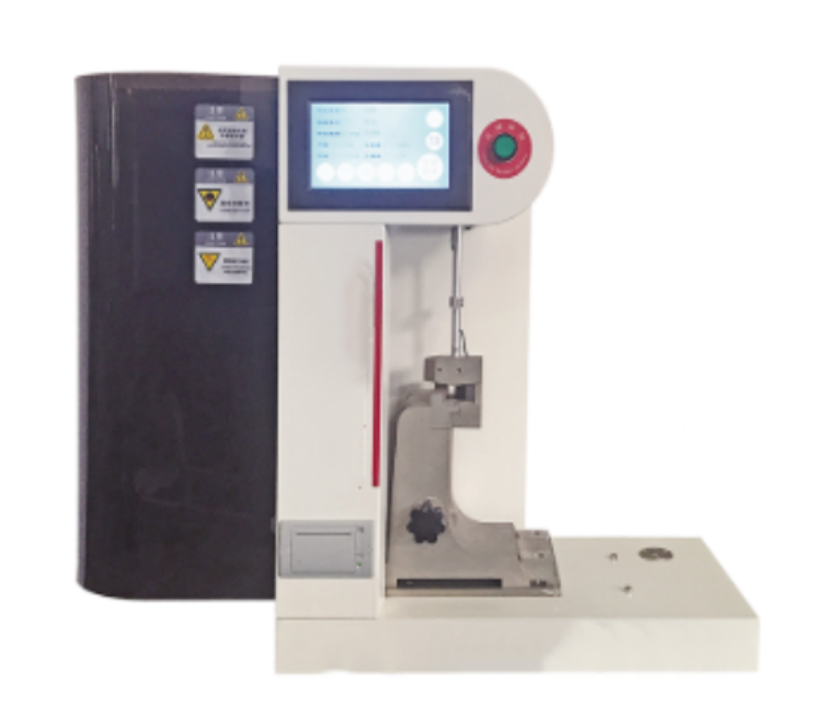
Advanced Testing CapabilitiesDesigned to facilitate tribological research, this friction machine handles applications ranging from basic material testing to advanced simulation of real-world wear. The precision servo motor delivers controlled and repeatable motion, suitable for metals, polymers, and coatings. With a comprehensive test range and flexible specimen handling, researchers can reliably evaluate frictional forces, wear rates, and environmental influences.
Intuitive Control & Data ManagementOperate the machine effortlessly through a responsive touch panel with digital display, streamlining the entire testing process. Real-time data collection and transmission via USB and LAN enable seamless data analysis and integration into research workflows. With support for automatic or manual lubrication, experiment conditions can be meticulously managed for optimal results.
Robust Design & Safety FeaturesThis machine is crafted from stainless or alloy steel for enhanced durability and precision. Table-top mounting provides stability, while built-in safety systems, including emergency stop and overload protection, ensure user security. Optional features like water cooling and controlled atmosphere chambers allow testing under high temperature, humidity, and specific gas pressures, broadening research possibilities.
FAQ's of High Frequency Friction Machine:
Q: How do I operate the High Frequency Friction Machine for testing?
A: Begin by securely mounting your specimen using the provided holders and configuring the necessary test parameters on the touch panel. Next, select automatic or manual lubrication as per your experiment needs, set up the desired frequency and load, then initiate the test. Data collection is managed digitally, and safety features like emergency stop are easily accessible throughout the process.
Q: What kind of specimens and materials can this machine test?
A: This machine is designed to test a wide array of materials including metals, polymers, and coatings. Standard specimen size is 10 mm x 10 mm, and it accommodates one or two specimens per test. Specialized add-ons allow testing under varied environmental and atmospheric conditions to simulate real-world applications.
Q: When is it beneficial to use the optional water cooling system?
A: The optional water cooling system is advantageous when conducting high-intensity or long-duration tests that may cause excess heat build-up. It aids in maintaining stable test temperatures, especially during high-frequency operations or when the high-temperature add-on is in use.
Q: Where can I access the data recorded during a test?
A: Test data can be accessed directly through the machine's digital display. Additionally, results are easily exported via the USB or LAN ports, allowing for secure data transfer and integration with laboratory data management systems.
Q: What are the main safety features of this friction machine?
A: For operator safety, the machine is equipped with an emergency stop function and overload protection. These safeguards help prevent accidents and minimize potential damage in unexpected situations, ensuring secure operation throughout experimental procedures.
Q: How does the controller interface enhance user experience?
A: The interface utilizes a touch panel with a digital display, making test setup, operation, and monitoring straightforward. Users can rapidly change parameters, visualize real-time data, and manage settings with minimal training, optimizing efficiency and usability.
Q: What benefits does the machine offer for tribological research and material testing?
A: This friction machine delivers precision measurements with a wide range of control options, including environmental and loading conditions. Its flexible setup and robust data output capabilities empower researchers to conduct comprehensive analyses, accelerate development cycles, and produce reliable, repeatable results.




 Send Inquiry


 Send Inquiry
