About High Temperature Tribometer
Applications
You can use this tester for:
High-temperature friction and wear testing of metals, ceramics, and polymer materials
Friction tests under different lubrication states, including oils and gases
Dry, oil-lubricated, and gas-lubricated tests at elevated temperatures
Comparative wear evaluation and material performance assessment in high-temperature environments
Industrial product development, material selection, and quality control
Standards
ASTM G99: Standard Test Method for Wear Testing
ASTM G133: High-Temperature Friction and Wear Test Method
ISO 20808: Solid Material Friction and Wear Test
GB/T 3147: Methods for Determining Friction Material Wear Performance
Technical Specifications
| Parameter |
Range / Specification |
| Test Force Loading Range |
0.110 N, 10200 N |
| Maximum Friction Torque |
2.5 Nm |
| Spindle Maximum Speed |
2000 rpm |
| Heating Temperature Range |
Room temperature 1000 |
| X-Axis Adjustable Friction Radius |
035 mm |
| Z-Axis Adjustable Lift Height |
050 mm |
| Test Medium |
Dry friction, circulating gases (N, CO, He, Ar, etc.), oil |
| Time Display & Control |
0999999 s/min |
| Revolution Display & Control |
0999999999 r |
| Machine Weight |
Approx. 90 kg |
| Power Supply |
220 V, 16 A |
| Power |
1.5 kW |
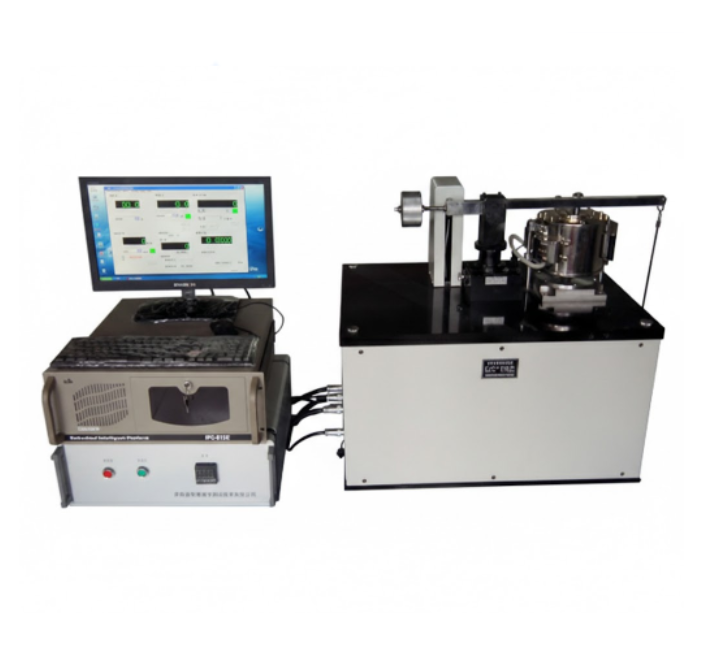
Advanced Temperature Control and Data AcquisitionEquipped with a high precision resistive heater and PID controller, this tribometer offers exceptional thermal stability for testing specimens up to 1000C. Computer control and dedicated acquisition software manage real-time monitoring and automatic data recording, ensuring tests are consistent and results are easily accessible. Data can be output in CSV format, making analysis convenient and compatible with Excel.
Versatile Testing Environments and ModesThis instrument can simulate a range of test environments, from ambient air to vacuum or controlled gas atmospheres, accommodating the requirements of both fundamental research and routine quality assurance. It supports multiple testing methodologies, including ball-on-disk, pin-on-disk, and reciprocating modes, widening its scope for different tribological measurements.
Precision Measurement and User SafetyDesigned for accuracy and reliability, the tribometer offers a friction measurement resolution as fine as 0.01 N and wide load test capabilities from 0.01 N to 200 N. To protect both the user and the instrument, it includes robust safety features such as over-temperature and overload protection. High-grade stainless steel and precision-machined aluminum components enhance durability.
FAQ's of High Temperature Tribometer:
Q: How does the high temperature tribometer simulate different testing environments?
A: The tribometer is designed to operate in various controlled environments, including ambient air, vacuum, or custom gas atmospheres. This flexibility allows researchers to replicate real-world conditions for accurate tribological testing, thanks to integrated gas inlet and outlet ports compatible with a range of gases.
Q: What data formats are available for exporting test results and how can they be analyzed?
A: Test data can be exported in CSV format, which is fully compatible with Microsoft Excel and other data analysis software. This enables users to efficiently compile, process, and interpret friction, wear, and lubrication data for research or quality assurance reports.
Q: When should I use the optional cooling system and how does it function?
A: The optional air or liquid cooling system is recommended when rapid specimen cooling is essential or prolonged high-temperature operations risk instrument overheating. This feature helps maintain optimal testing conditions, safeguarding both specimens and the tribometer during extended experiments.
Q: Where can this tribometer be effectively utilized?
A: The high temperature tribometer is ideal for use in research laboratories, materials testing centers, and industrial settings for quality assurance purposes. Its robust construction and versatile operating conditions make it suitable for investigating metals, ceramics, polymers, and composite materials.
Q: What is the process for setting up a test specimen and starting a measurement?
A: Users can easily mount a standard 10 mm diameter disk or customized specimen. After securing the sample and selecting the desired testing mode and environmental parameters, users set the temperature, load, and speed via the computer interface. The software guides the user through initialization, real-time monitoring, and recording of all parameters.
Q: What are the main benefits of using this tribometer for high-temperature tribological testing?
A: Key advantages include precise temperature control up to 1000C, high measurement resolution (0.01 N), compatibility with varied test modes and controlled test environments, and reliable safety features. These attributes ensure dependable, reproducible results for advanced materials research or industrial evaluation.





 Send Inquiry


 Send Inquiry
