
Talk to us
Talk to us
Mechanical property testing of metal, ceramic, polymer, and composite material surfaces.
Wear and friction performance evaluation of coatings, platings, thin films, and composite materials.
Friction and wear testing under low-temperature conditions.
Friction and wear testing in liquid media environments (e.g., lubricating oil, saline).
Material development, quality control, and tribology research in industrial production and laboratories.
GB/T 3960-2016 Plastics Determination of Sliding Wear Properties
GB/T 20394-2013 Artificial Turf Durability Test Method
JB/T 8554-1997 Coating Adhesion Automatic Scratch Test Method
ASTM G99 Standard Test Method for Wear Testing with a Pin-on-Disk Apparatus
ASTM G133 Standard Test Method for Linearly Reciprocating Pin-on-Flat Sliding Wear
ISO 20502 Coating Scratch Test
DIN 50324 Friction and Wear Test Standard
| Parameter | Specification |
|---|---|
| Reciprocating Friction | Load: 301000 g (weight), 10200 N (automatic); accuracy 0.2% F.S.; sliding frequency 0.145 Hz; stroke 0.525 mm; max reciprocating force 100 N |
| Electrochemical Reciprocating Friction | Load: 301000 g (weight), 1050 N (automatic); accuracy 0.2% F.S.; frequency 0.15 Hz |
| Rotational Friction | Load: 301000 g (weight), 10200 N (automatic); accuracy 0.2% F.S.; table speed 52800 rpm, stepless |
| Ring-on-Block Friction | Load: 1001000 g (weight), 10200 N (automatic); accuracy 0.2% F.S.; spindle speed 52000 rpm, stepless |
| Pipe Surface Friction | Load: 501000 g (weight); accuracy 0.2% F.S.; reciprocating stroke 0.520 mm; frequency 0.135 Hz |
| Wear Volume Measurement | Load 40 g; wear scar depth 0.5 mm; accuracy 0.02 m (customizable) |
| Low-Temperature Module | Load 0.310 N; accuracy 0.2% F.S.; temperature range: room temperature to -50 |
| Power Supply | 220 V, 50 Hz, 6000 W |
| Instrument Weight | Approx. 150 kg |
| Workbench Size | 1800 750 800 mm (user-supplied) |


Price:
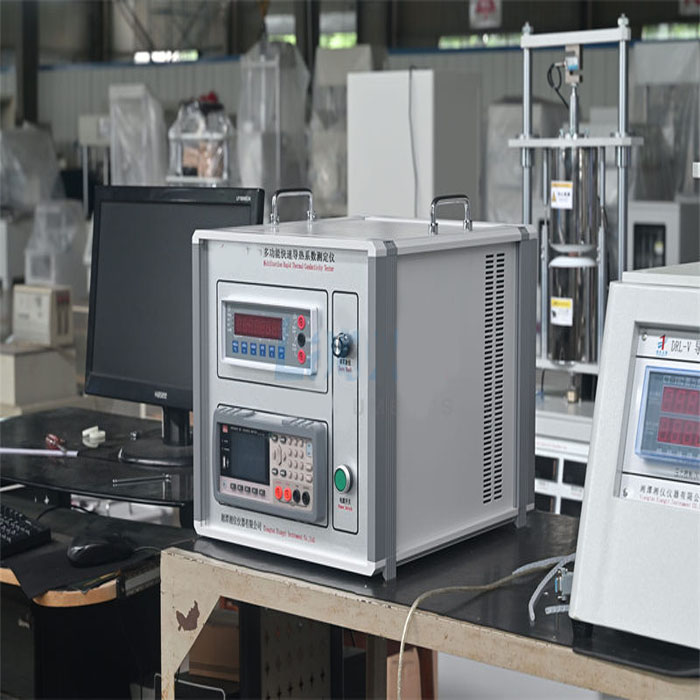
Price 2000.0 USD ($) / Unit
Minimum Order Quantity : 1 Unit
Humidity : 10% 90% RH (Noncondensing)
Power Source : 220V AC 50/60Hz
Specimen Size : 50mm x 50mm
Usage : Measuring thermal conductivity of geotechnical materials

Price 1500.0 USD ($) / Unit
Minimum Order Quantity : 1 Unit
Humidity : 10% to 90% RH (noncondensing)
Power Source : Electric
Specimen Size : Minimum 30 mm thickness, 50 mm diameter (typical)
Usage : Laboratory, Industrial Testing

Price 2200.0 USD ($) / Unit
Minimum Order Quantity : 1 Unit
Humidity : Up to 95% RH (with environmental chamber)
Power Source : Electric
Specimen Size : 10 mm x 10 mm standard
Usage : Friction and wear testing

Price 1200.0 USD ($) / Piece
Minimum Order Quantity : 1 Piece
Humidity : 85%
Power Source : AC 220V/50Hz
Specimen Size : 5 mm 30 mm fiber length
Usage : Fiber Fineness Measurement


 Send Inquiry


 Send Inquiry
